
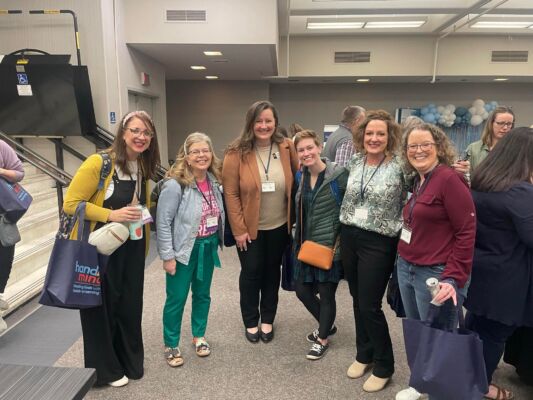
Meet keynote speaker, Dr. Terrie Noland
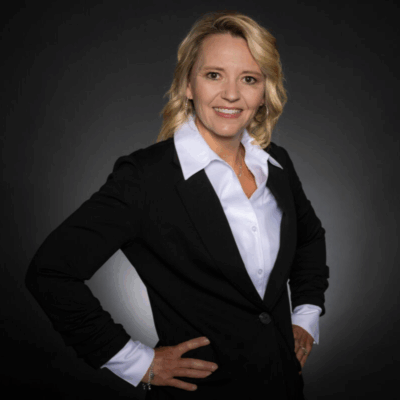
Terrie Noland is a bold champion of leadership development as the single greatest factor in literacy transformation. As a former educator, school leader, and Vice President at Learning Ally, she continues to provide strategic insight to organizations and schools looking to make sweeping leadership moves in literacy. With a doctorate in Literacy and Educational Leadership and Maxwell Leadership certification, Dr. Noland inspires through keynote speaking, mentorship, and leadership development content. Her philosophy: great leaders cultivate success in others. Known for her contagious energy, she empowers others to discover the transformative power of literacy and leadership. Outside her work, she tutors children, mentors emerging leaders, and envisions a world where leadership unlocks limitless possibilities.
Conference Schedule:
8:00-8:45 am Registration & Breakfast
8:45-9:00 am Welcome & Introductions
9:00-10:00 am Keynote
10:15-11:15am Breakout Session #1
11:30-12:30 pm Breakout Session #2
12:30-1:30 pm Lunch/Visit Vendors
1:30-2:30 pm Breakout Session #3
2:45-3:45 pm Breakout Session #4
4:00-4:30 pm Reflections & Closing
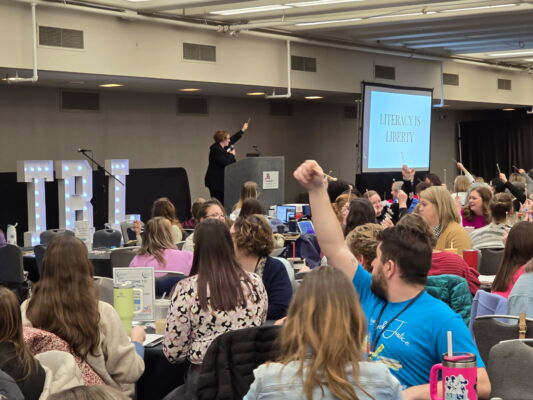
Breakout Session Information
Thank you for your patience as we continue to add our breakout sessions. Each conference block will feature five breakout options. Please check back soon for the full lineup!
Breakout Session 1: 10:15am-11:15am
See It. Say It. Move It. Master It. with Leah DeYoung
This session introduces practical, multisensory routines that bring phonics instruction to life. Participants will learn how to intentionally integrate visual, auditory, and kinesthetic/tactile techniques to strengthen sound–symbol connections and support accurate decoding and spelling. We will practive routines to deepen orthographic mapping and build automatic word recognition. Attendees will leave with simple, high-impact strategies that can be used immediately in whole-group instruction, small groups, or intervention settings—no special materials required.
Leah DeYoung has worked in ELA and Special Education settings for 25 years. She currently serves as an CALT at Eagle Heights Elementary. Outside the classroom, she works as a virtual therapist and advocate. She also works to promote structured literacy practices as a board member for KS/MO IDA and as an ambassador for the Reading League of Missouri.
From Grammar to Savory Sentences: Write with Ease with Colleen Zink
Drawing upon knowledge gained from William Van Cleave, this presentation will take attendees on a journey of learning about grammar, syntax, and paragraph writing. The content begins with the basics by establishing a common vocabulary (subject, predicate, clause, phrase). Unlocking the structure of various sentence types while incorporating grammar instruction will be highlighted. Continuous interactive aspects of the presentation will engage the audience members in writing activities, as we would have our students do, to build connections and achieve a greater understanding of sentence structure, parts of speech, and paragraph writing. The remainder of the presentation will focus on practical, multisensory ideas to use with students to deepen their knowledge of syntax and writing, which ultimately, directly correlates to the improvement of their comprehension.
Colleen Zink, a 25-year veteran educator, is a Fellow in the Orton-Gillingham Academy and serves as the K-12 Literacy and Dyslexia Coordinator for Blue Valley Schools.
Responsive Teaching: Tier 1 Differentiation with Dr. Shelley Blackwell and Dr. John McCormick
This session provides a quick overview of the MTSS framework and its role in supporting all learners. We’ll focus on Tier 1 differentiation—why it matters, its impact on student success, and practical strategies for making it happen. Participants will learn how to strengthen core instruction through intentional planning and responsive practices that meet diverse needs within the classroom. Administrators and teachers will leave with actionable tips to enhance Tier 1 differentiation and create a strong foundation for MTSS implementation.
Dr. Shelley Blackwell, elementary administrator and literacy specialist, is passionate about leadership and advancing language and literacy education. She created open-source morphology and orthography curricula for teachers. Dr. McCormick serves as a Blue Valley instructional coach, empowering educators through collaboration, data-driven practice, and purposeful professional learning to elevate student achievement across classrooms.
Empowering Every Learner: Special Education Practices for Effective Literacy Support with Rachel Rubio and Neal Zoglmann
This session focuses on special education and how the legal systems of support provided for students with disabilities can be enhanced in combination with the plethora of research surrounding literacy. In this session, we will examine the tenets of special education and how they connect to best practices in literacy instruction and intervention.
Rachel Rubio has a background in special education as a classroom teacher and district dyslexia specialist, supporting students with complex literacy needs through evidence-aligned practices. She is currently a doctoral student in the Literacy Studies program at Middle Tennessee State University, where her research focuses on dyslexia and reading difficulties.
Neal Zoglmann is a Reading Support Teacher and Special Education Case Manager in South Central Kansas, who also serves on the Executive Board for The International Dyslexia Association, Kansas-Missouri Branch. Neal holds a Bachelor’s degree in Elementary Education Unified, a Master’s Degree in Special Education Teaching, and a Master’s in Educational Psychology. He is currently wrapping up the practicum requirements towards a Master’s in Literacy and Dyslexia with certification as a Dyslexia Specialist from the Center for Effective Reading Instruction, and is completing Take Flight Training towards Academic Language Therapy certification. Neal is also a student in the University of Florida’s Doctorate in Special Education program with an emphasis in Teacher Leadership and Learning, and focuses his work on effective literacy training and professional development for intervention staff supporting students with reading difficulties.
Considerations for Teaching Phonics and Phonemic Awareness to English Learners with Diana Mendoza
The Science of Reading has become a large focus within education in recent years as more and more school districts and even state departments of education endeavor to address growing literacy needs. As the nation focuses on the Science of Reading our classrooms continue to become increasingly more diverse. Students are coming to our classrooms with varying levels of literacy and language proficiency. Understanding the influence of the native language on phonological awareness and phonics instruction is critical as we begin to address the needs of our diverse student population. In this session, educators will hone in on the neuroscience behind how students learn to read with specific consideration for ELs. Participants will be able to recognize the interconnectedness between oral and written language. They will come away with an understanding of how to contextualize literacy instruction within foundational skills in order to make phonics comprehensible for English Learners.
Ms. Diana Mendoza is the Director of ESOL & Diversity for Dodge City Public Schools and serves on the Kansas Board of Regents as well as MIDTESOL’s Kansas Member-At-Large. She holds a B.S. in Elementary Education and an M.S. in Educational Leadership from Kansas State University, where she is also pursuing her Ed.D. in Curriculum & Instruction. In her role, she supports teachers in implementing best practices for culturally and linguistically diverse learners and leads initiatives for migratory youth. Diana is a dedicated statewide advocate, having served on multiple KSDE committees focused on ESOL, migrant education, assessment, and literacy.
Breakout Session 2: 11:30-12:30PM
Engaging Grade 4-12 Students in Academic Discussion with Lisa Klein
This workshop equips educators with research-based strategies to facilitate meaningful academic discussions that deepen comprehension, build critical thinking skills, and enhance content knowledge across all subject areas in grades 4-12.
Lisa Klein is co-editor of Keys to Early Writing and Keys to Content Writing and a contributor to all Keys to Literacy professional learning offerings. An experienced educator, she provides strategic oversight of relationship management in service of literacy initiatives and leads the Relationship Management team at Keys to Literacy.
Structured Literacy Applies to Language Comprehension Too! with Dr. Trina Spencer
The science of reading movement has focused primarily on explicit, systematic phonics instruction to the neglect of explicit, systematic language comprehension instruction. Dr. Spencer will provide an in-depth tutorial on the characteristics (i.e., explicit, systematic, cumulative) of structured literacy applied to language comprehension. She will show examples of evidence-based, multi-tiered language instructional and assessment tools. Teachers will receive a Structured Literacy Checklist for Language Comprehension and practice evaluating the quality of curricula. They will be equipped to use the checklist to examine their current (and future) instructional programs. They will also be able to download an assessment tool (for PreK to Grade 8 students) for free that helps teachers measure all the language comprehension strands for screening and progress monitoring purposes.
As a reading scientist, Dr. Spencer designs structured oral language instructional programs and assessment tools that help educators promote strong language foundations of literacy. Dr. Spencer currently serves as a Professor and Director of Juniper Garden Children’s Project, University of Kansas.
Strong Systems, Strong Readers: Designing Building-Wide Literacy for Adolescents with Amanda Rucker, Denise Brown, and Vicki Cooper
When middle and high content teachers have their own disciplinary standards to address, bridging the literacy gap for students who are struggling to keep up with the content can be a challenge. Developing a building-wide strategy has been a great first step for many schools, providing a consistent routine and access to core curriculum and standards for all students. This session will focus on the rationale for a building-wide strategy, how to get buy-in from all staff, selecting a building-wide routine that fits the school’s needs, and steps to implementation. You’ll also get the chance to hear about Kansas schools that have initiated this work and have successfully implemented a building-wide literacy strategy.
Denise Brown has been a member of the Kansas MTSS team for 15 years, presenting locally, statewide, and nationally. She has a passion for bringing practical, research-aligned applications to classroom teachers.
Amanda Rucker is a Literacy Specialist with the Kansas MTSS team, supporting statewide K-12 instruction through data and evidence-based practices. She is a former Wichita Public Schools educator, coach, leader, and facilitator of learning.
Vicki Cooper brings 29 years of teaching, pre-kindergarten to 9th grade, with her as a Literacy Specialist with the Kansas MTSS team. She currently supports multiple Kansas districts, is a proud member of The Reading League Kansas, and works statewide as a literacy advocate.
Enhancing Family-School Collaboration: A Pilot Family-Tutoring Program with Dr. Tiffany Seaman
This presentation examines the effectiveness of a family tutoring program designed to align with school-based reading interventions for students at risk for reading difficulties. The study explores family training and coaching, the feasibility and benefits of the model, and its impact on home-school collaboration and student reading outcomes.
Dr. Tiffany Seaman is the K-5 Literacy Coordinator for the Blue Valley School District in Kansas. She has previously served as a classroom teacher, reading and math interventionist, special educator, and instructor in the Department of Elementary Education, Early Childhood, and Special Education at Emporia State University. She earned her doctorate from Mount St. Joseph University’s Reading Science program, where her dissertation focused on family-school collaboration. Tiffany also serves as the board president for The Reading League Kansas. As a parent of a child with dyslexia and ADHD, she is deeply committed to advocating for literacy across Kansas.
Write with Flow: Handwriting, Automaticity, and the Reading Brain (K-6) with Sarah Bondy
This session explores the neuroscience behind handwriting and its role in developing automaticity, reducing cognitive load, and supporting fluent writing across grades K-6. Participants will examine how explicit, multi-sensory handwriting instruction aligns with Kansas Handwriting Standards and the Science of Reading. Teachers will engage in hands-on practice with research-based routines, analyze common student handwriting challenges, and learn how to prioritize accuracy before speed.
Sarah Bondy has 20 years of experience in general education as a classroom teacher, reading interventionist, and K-5 Literacy Lead for Arizona. Now, from her rural town of Pratt, KS, she supports educators nationwide and serves on The Reading League Kansas board.
Breakout Session 3: 1:30-2:30PM
Sound Sense: Making Phonological Awareness Come Alive with Leah DeYoung
This session focuses on active, multisensory routines that help students internalize the sound structures of spoken language—an essential foundation for reading and spelling. Participants will learn how to use movement, manipulatives, and oral language play to support sound isolation, blending, segmenting, and manipulation in engaging, developmentally appropriate ways. Attendees will leave with simple, high-impact activities that can be implemented immediately in whole-group and small-group instruction.
Leah DeYoung has worked in ELA and Special Education settings for 25 years. She currently serve as an CALT at Eagle Heights Elementary. Outside the classroom, she works as a virtual therapist and advocate for Nashville Dyslexia Center. She also works to promote structured literacy as a board member for KS/MO IDA and as an ambassador for the Reading League of Missouri.
Beyond Memorization: Practical Strategies for Home and Classroom with Dr. Shelley Blackwell
Ever wonder how to practice spelling at home without endless memorization? This session explores how the reading brain learns to spell and introduces structured literacy strategies for teachers and parents. We’ll cover sound-spelling mapping at both single- and multi-syllable word levels, hands-on activities for practicing heart words, and techniques for identifying and correcting spelling errors in connected writing. Participants will learn how to analyze error types to target instruction effectively and leave with practical, research-based tools for home and classroom use. Interactive practice included!
Dr. Shelley Blackwell, elementary administrator and literacy specialist, is passionate about leadership and advancing language and literacy education. She created open-source morphology and orthography curricula for teachers.
Powering Up Comprehension: Practical Close-Reading Routines for K-12 with Caitlin McKenzie and Lauren Keeling
Ready to boost every learner’s confidence with complex texts without lowering the bar? In this interactive session, we’ll explore why close reading is one of the most powerful, research-aligned practices for helping all students, K-12, access grade-level content with independence. Participants will experience close-reading routines and learn how purposeful questioning, collaborative dialogue, and text-dependent thinking can transform comprehension. We’ll unpack practical strategies you can take straight back to your classrooms, including routines that support multilingual learners, struggling readers, and advanced students alike. You’ll leave with ready-to-use tools that strengthen literacy instruction, build knowledge, and empower students to tackle complex texts with skill, stamina, and curiosity. See how close reading – done well – becomes a catalyst for equitable access, deeper learning, and schoolwide coherence in literacy practice.
Caitlin McKenzie is the Senior Product Design Director at Imagine Learning. With more than 20 years of experience as an ELA teacher, instructional coach, and literacy leader in nonprofit spaces, she has supported large-scale curriculum adoption and implementation efforts across the country. Most recently, Caitlin helped bring Imagine Learning’s best-in-class K-5 literacy solution, Dragonfly, to life. She’s passionate about creating classrooms where teachers feel supported and successful, students feel a strong sense of belonging, and learning is playful and fun!
Lauren Keeling is an education professional with experience as a teacher, principal, and curriculum strategist. She currently serves as a core curriculum consultant with Imagine Learning and hosts Heart Work, a podcast sharing the stories of America’s educators. A passionate advocate for literacy, Lauren is pursuing a doctorate in Public and Non-Profit Leadership to expand her impact on education nationwide.
Utilizing Data-Based Decision-Making to Support Students with Reading Difficulties with Alex Fender and Thomas Hurford
Learn how to use student data and problem-solving processes to screen, support, evaluate, and monitor students with reading difficulties. Participants will learn about screening and intervention components, specific learning disabilities in reading, the identification of disabilities in the school setting, and how to use student data to inform decision-making. We will review key tenets from the scientific literature, problem-solving models, federal and state guidelines, and expert recommendations. Innovative and practical strategies will be demonstrated so that team members can collaborate in providing high-quality services for students with goals that are strategic, data-based, and aligned with student success.
Alex Fender is the director of evaluation at the Center for Reading and a nationally certified school psychologist (NCSP) with a master’s degree in clinical psychology. She has worked for more than 13 years in the fields of psychology and education, serving as a school psychologist, psychological associate, and researcher.
Thomas Hurford is the director of intervention and professional development at the Center for Reading, where he trains interventionists to use evaluation results and Structured Literacy strategies to implement science-based reading intervention. Previously, Thomas was a school psychologist for over a decade working in central Kansas and Tulsa, Oklahoma.
The Writing Rope with Lisa Klein
This workshop presents an overview of The Writing Rope model for writing instruction (Sedita, 2019) that represents multiple components of writing instruction as strands in a rope. An explanation with references to research findings will be provided for the five strands: 1) Critical Thinking, 2) Syntax, 3) Text Structure, 4) Writing, 5) Transcription. The importance of integrating reading and writing instruction, including sharing a comparison of Scarborough’s Reading Rope and The Writing Rope.
As a member of the senior leadership team at Keys to Literacy, Lisa brings a unique perspective to her role as Vice President and Senior Director of Relationship Management. With a background that bridges classroom teaching, special education, and coaching, she is committed to strengthening literacy instruction for all students. She co-edited Keys to Early Writing and Keys to Content Writing and has contributed to numerous other Keys to Literacy resources.
Breakout Session 4: 2:45-3:45PM
ADHD and Dyslexia: What Parents, Teachers, and Administrators Need to Know with Dr. David Hurford
ADHD and dyslexia frequently co-occur, yet they are often misunderstood, misidentified, or addressed in isolation. This session will explore how ADHD and dyslexia intersect, how their overlapping characteristics can impact learning, and why accurate identification matters for effective support. Participants will gain a clearer understanding of the differences and connections between attention and language-based reading difficulties, along with practical considerations for instruction, intervention, and systems-level decision-making. Designed for parents, teachers, and administrators, this session emphasizes collaboration, evidence-aligned practices, and shared responsibility in supporting students with complex learning profiles.
David P. Hurford, Ph.D. is the executive director of the Center for Reading at Pittsburg State University and is the founder and manager of the Center for the Assessment and Remediation of Reading Difficulties (CARRD, Inc.), a nonprofit dedicated to assisting individuals with dyslexia become competent readers. He is also a co-founder of Dyslexia Help LLC (Dyslexia101.com), which provides online evaluations and interventions. Dr. Hurford is the executive editor of Perspectives on Language and Literacy which is a journal of the International Dyslexia Association.
From Policy to Practice: Kansas Literacy Initiatives with Dr. Laurie Curtis
This presentation will provide information related to what Kansas is doing to ensure that educators who receive training in structured literacy, such as the state’s LETRS initiative, are capable and confident in using what they learned as they select and implement high-quality instructional materials. The state’s new tools for coaching conversations will be shared and reviewed by participants, with specific time taken to review the K-2 Foundational Skills, K-2 Knowledge Building, and the ELA 3-12 observation/coaching tools. Participants will learn about the KSDE Literacy Leadership Cadre, the new Reading Specialist PLC, the state Literacy Summit, and other opportunities for collaboration and partnership. Participants will be able to share their ideas for additional support KSDE can provide to assist both educators and students.
Dr. Laurie Curtis serves as the program manager for the structured literacy and dyslexia initiatives in the state of Kansas in the Division of Learning Services at the Kansas State Department of Education.
Words Matter: Supporting Reading Comprehension for Adolescent Students with Effective Vocabulary Instruction with Briana Curry and Rachel Ishman
Vocabulary knowledge is a key driver of reading comprehension across all content areas, especially for adolescent learners. In this session, participants will explore why explicit vocabulary instruction matters in every classroom and how it supports access to complex text. Teachers will learn a research-aligned framework for selecting high-utility Tier 2 and Tier 3 words and teaching them through a consistent, explicit routine. Participants will actively engage with authentic content-area texts, practice identifying and tiering vocabulary, and rehearse an explicit vocabulary routine they can immediately use with students.
Briana Curry is a Kansas MTSS Literacy Specialist with over 20 years of experience providing data-driven professional learning and coaching to improve reading outcomes statewide.
Rachel Ishman brings 19 years of Literacy and ESOL experience to her role supporting Kansas districts with data-driven, evidence-based K-12 instruction and professional learning.
This Isn’t Horseshoes: Ten Specific Ways to Sharpen Explicit Instruction with Dr. Carolyn Carlson and Tracie Lutz
Explicit instruction is an essential principle of structured literacy. In this session, participants will actively engage in sharpening their skills in explicit literacy instruction. Based upon research and experience, the presenters will share ten specific ways participants can immediately make their literacy instruction more explicit, resulting in an increase in student learning.
Dr. Carolyn Carlson is a Professor of Education at Washburn University. In addition to teaching students at the preservice and inservice levels, she is a passionate advocate for public education.
Ms. Tracie Lutz serves as a Senior Lecturer at Washburn University. She teaches courses focused on Literacy and Assessment, with a keen concentration on The Science of Reading and Best Teacher Practices.
Before Print: Strengthening Oral Language to Drive Literacy Learning Success with Dr. Kim Moody
This interactive session explores how oral language forms the foundation for skilled reading within the Science of Reading and structured literacy. Participants will examine the essential language components—phonology, vocabulary, syntax, and discourse—and how each supports decoding, fluency, and comprehension. Through hands-on activities, sample lessons, and modeled strategies, teachers will learn practical ways to embed rich oral language experiences into daily instruction. Attendees will receive classroom-ready tools, including routines for dialogic reading, morphology-rich conversations, and structured academic talk. Participants will collaborate in small groups to analyze student language samples, try out scaffolds for diverse learners, and adapt materials to their own grade levels. Attendees will leave with actionable practices that immediately strengthen literacy learning for all students.
Dr. Kimberly Moody is a professor at Wichita State University and director of CLEAR, where she advances research-based literacy practices through educator preparation, statewide partnerships, and community-engaged initiatives. Her scholarship emphasizes structured literacy, executive function, and strengthening protective factors that improve youth academic outcomes.
Thank You, Sponsors!